Dress for the Drip: A Practical Wardrobe and Packing Guide for IV Day

Photo: Internet Archive Book Images, No restrictions, via Wikimedia Commons
The outfit is part of the appointment
An IV appointment is mostly about the chair, the clinician, and the drip. But the thirty minutes before and after that chair matter too. If your sleeve is tight, your bag is stuffed with things you do not need, and you are hungry enough to feel shaky, the visit can feel more complicated than it needs to be.
Dressing and packing for an IV appointment is not about looking a certain way. It is about removing small points of friction so the clinical part can go smoothly. Think of it as a quiet form of preparation: comfortable clothes, a little water, a snack you actually like, and a plan for what stays in the car.
Start with the sleeve, not the outfit
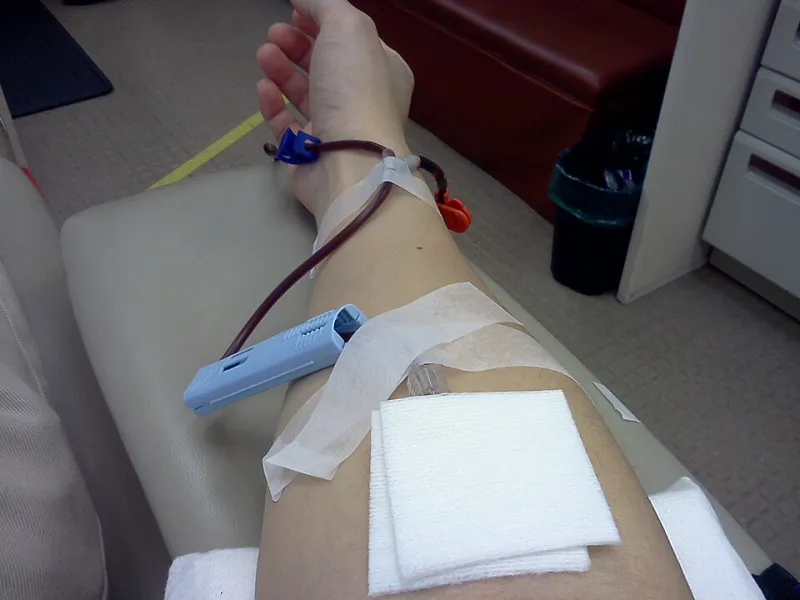
Vein access usually means exposing an arm, often from the forearm up to the lower bicep. A snug long-sleeve shirt can be rolled up, but it can also act like a tourniquet above the elbow, which is not helpful when a clinician is trying to work. A tight cuff or a stiff denim sleeve is the kind of thing that turns a simple step into a small wrestling match.
The easiest choice is a short-sleeve shirt or a loose long-sleeve top with a wide cuff that can be pushed above the elbow without squeezing. If the weather calls for more coverage, a zip-up hoodie, a cardigan, or a light jacket you can take off completely is friendlier than a pullover you have to wiggle out of. Clinics generally have a place for a jacket or bag, but you will feel more settled if you are not trying to manage a coat, a purse, and a sleeve all at once.
One practical note: avoid wearing a shirt so loose that it slides off your shoulder or gets in the way when you move. You want roomy, not chaotic.
Layers are your friend in clinic weather
Waiting rooms and treatment rooms tend to run one of two temperatures: a little too warm or a little too cool. A simple layer solves both. A lightweight cardigan, a zip hoodie, or a thin flannel over a t-shirt gives you something to put on if the room is chilly and something to remove if you are warm.
Layers also help after the appointment. Some people feel a little cool or tired afterward, especially if they have been sitting still. Having a soft layer to pull on before you walk to the car is a small comfort that costs almost nothing.
Skip anything that is complicated to remove or adjust. A jumpsuit may be stylish, but it is not your friend when you need to use the restroom before the drip starts. The same goes for a shirt with a hundred tiny buttons or a dress that requires a team to get out of. Simple is better.
Bottoms and shoes: comfort with an exit plan
You will likely be sitting for a while, so choose bottoms that do not dig in at the waist. Leggings, joggers, relaxed jeans, or soft trousers all work. If your appointment includes a longer infusion, think about whether you will be comfortable in the same position for an hour or more.
Shoes matter more than people expect. You may be parked farther away than you planned, or you may feel a little unsteady after sitting. Flat, closed-toe shoes with a little support are a sensible default. Save the heels and the complicated sandals for another day. If it is raining or snowing, choose shoes that can handle a wet parking lot without turning your walk back to the car into a slip risk.
What to bring: a small, useful kit
You do not need to pack for a weekend. A small bag with a few practical items is enough.
- Water. Hydration before and after an IV is generally a good idea, and having your own bottle means you are not hunting for a cup. Ask the clinic if there are any fluid restrictions for your specific appointment.
- A snack. Something with a little protein or complex carbohydrate—nuts, a granola bar, crackers, a banana—can help if you arrive hungry or feel a bit off after sitting. Avoid anything that requires two hands and a lot of unwrapping.
- Phone charger or battery pack. A dead phone is a modern form of stress. A short charging cable or a small battery pack takes up almost no space.
- Insurance card and ID. Even if you have been to the clinic before, having your card and a photo ID with you saves time at check-in.
- Medication list. A written list or a photo of your medication labels is useful if the clinic asks. This is especially true if you take blood thinners or other medications that affect bleeding.
- Headphones. A waiting room can be noisy. Headphones let you listen to something calming or simply tune out.
If you have a favorite small pillow or a light blanket, you can bring it, but call first to see what the clinic provides. Many infusion clinics have blankets and pillows on hand.
What to leave at home or in the car
Some things are better left behind. Expensive jewelry, large amounts of cash, and irreplaceable items are not worth the worry. Leave the laptop at home unless you genuinely need it, and avoid bringing a bulky bag that you have to keep track of while you are in the chair.
In the car, keep a spare layer, an umbrella, and maybe a backup snack. If you are driving yourself, leave a pair of comfortable shoes in the car if you wore something less practical. Keep valuables out of sight—trunk or covered storage is better than a passenger seat.
One thing to leave at home: the expectation that you have to be productive during the appointment. Many people bring a laptop and then feel frustrated when they cannot type comfortably with an IV in one arm. A book, a podcast, or simply a chance to sit still is often a better fit.
A quick pre-visit checklist
Before you walk out the door, run through this in your head: loose sleeve or short sleeve, layer you can remove, comfortable bottoms, flat shoes, water, snack, charger, insurance card, medication list, headphones. Keys, phone, wallet. That is it.
If you are unsure about clinic-specific rules—whether they allow food, whether they have blankets, whether they need you to bring your own medication list—call ahead. A two-minute phone call can save a lot of guessing.
The goal is not a perfect outfit. It is a visit with fewer distractions, so you can sit down, roll up a sleeve, and let the appointment be what it is: a clinical treatment with a little room for comfort.